



Die Universität im Profil
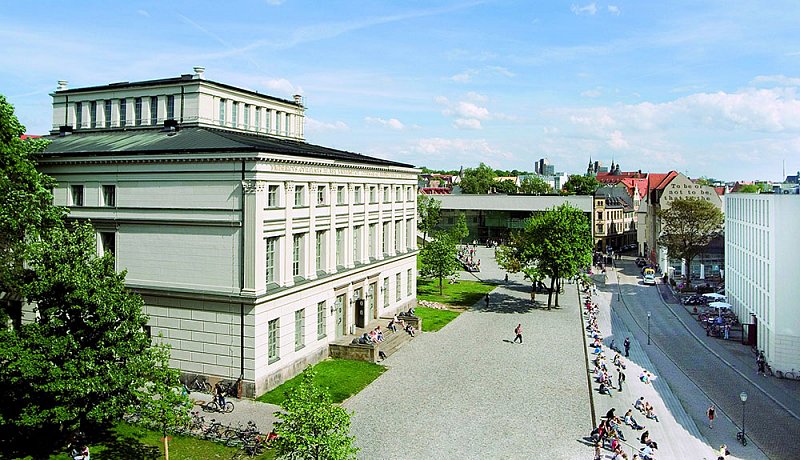
Blick auf den Universitätsplatz (Foto: Norbert Kaltwaßer)
Exzellent in der Forschung, stark für die Region
Die Martin-Luther-Universität Halle-Wittenberg (MLU) steht seit über 500 Jahren für Forschung und Lehre auf höchstem Niveau. Heute bietet sie ein breites Fächerspektrum in den Geistes- und Sozialwissenschaften sowie den Natur- und medizinischen Wissenschaften an. Sie ist ein Ort, an dem Wissen entsteht, kritisches Denken gefördert und freie Wissenschaft gelebt wird.
Die größte und traditionsreichste Hochschule Sachsen-Anhalts entstand 1817 aus dem Zusammenschluss der 1502 gegründeten Universität Wittenberg und der 1694 gegründeten Friedrichs-Universität Halle. Die MLU ist eine internationale Universität, die in der mitteldeutschen Region fest verwurzelt ist. Aktuell hat sie rund 19.000 Studierende, rund 350 Professorinnen und Professoren sowie mehr als 4.000 Beschäftigte.
Neben dem Weinberg Campus hat die MLU drei weitere Hauptstandorte: Der zentrale Universitätsplatz, der die Hauptgebäude versammelt, zählt zu den schönsten Europas. Auf dem Steintor-Campus sind viele geistes- und sozialwissenschaftliche Institute angesiedelt. In den Franckeschen Stiftungen befinden sich die Fakultäten der Erziehungswissenschaften und der Theologie.
Forschungsprofil
Das wissenschaftliche Profil der MLU ist geprägt durch die Profillinien „Transformation“, „Nachhaltigkeit“ sowie „Wissenskulturen und Bildung“. Darauf aufbauend bündelt die Universität ihre wissenschaftlichen Stärken in den vier Forschungsschwerpunkten:
- Pluralität, Partizipation, Aufklärung
- Gesundheit und Gesellschaft in Transformation
- Bausteine der Zukunft:
- Von der Pflanze bis zum Makromolekül
- Vom mineralischen Rohstoff bis zur Nanoelektronik
Mit diesen Fächergrenzen überschreitenden Schwerpunkten verbindet die Universität Grundlagenforschung mit Innovation und adressiert zugleich zentrale wissenschaftliche wie gesellschaftliche Herausforderungen der Gegenwart und Zukunft.
Exemplarisch für den wissenschaftlichen Erfolg der Universität steht das Exzellenzcluster „Center for Chiral Electronics“, das die Universität im Rahmen der Exzellenzstrategie des Bundes und der Länder gemeinsam mit Partnern in Halle, Regensburg und Berlin betreibt. Im Cluster entwickeln Forschende an der Grenze zwischen Physik und Chemie Konzepte für eine leistungsfähige, energiesparende Elektronik.
Wissenschaft und Strukturwandel
Die Themen Transformation, Nachhaltigkeit sowie Wissenskulturen und Bildung prägen nicht nur das Profil der Universität, sie sind auch für die Region von zentraler Bedeutung: Der Kohleausstieg, Herausforderungen wie der demografische Wandel, der Klimawandel und das Artensterben bedeuten für Sachsen-Anhalt grundlegende Umbrüche in der Wirtschaft und im Lebensalltag der Menschen. Gleichzeitig entstehen neue Chancen für Innovation, Wertschöpfung, Qualifizierung und nachhaltige Entwicklung. Als Zentrum der Transformationsforschung im Land Sachsen-Anhalt begleitet die MLU diese Entwicklungen mit wissenschaftlich fundierten und praxisnahen Vorschlägen für die Zukunft. Von diesem Engagement zeugen die großen Strukturwandelprojekte „Just Transition Center“ (JTC), „DiP Sachsen-Anhalt – Modellregion der Bioökonomie“ und „TPG – Digitale Zukunft von Pflege und Gesundheit“, die die MLU koordiniert.
Studium an der MLU
Auch in der Lehre setzt die MLU Maßstäbe: Studierende wählen aus mehr als 150 grundständigen und fast 80 weiterführenden Studienangeboten, von denen sich viele frei kombinieren lassen – bis hin zu deutschlandweit seltenen Fächern wie Sprechwissenschaft oder Medizinischer Physik. Entlang ihrer Profillinien entwickelt die Universität ihre Studiengänge auf fachlich hohem Niveau weiter und setzt sich intensiv mit aktuellen Themen wie Digitalisierung und Künstliche Intelligenz auseinander. Einen besonderen Platz nimmt die Lehrkräftebildung für allgemeinbildende Schulen ein: Die MLU trägt die Hauptverantwortung in Sachsen-Anhalt und bietet 1.000 Studienplätze pro Studienjahr an. Insgesamt studieren über 4.000 angehende Lehrerinnen und Lehrer an der MLU. Ebenso liegt die Ausbildung von Juristinnen und Juristen in Sachsen-Anhalt in der Verantwortung der Universität.
Universitätsmedizin
Die Universitätsmedizin Halle, zu der auch ein großes und modernes Klinikum gehört, verbindet Forschung, Lehre und Krankenversorgung. Hier werden Ärztinnen und Ärzte aller Fachrichtungen, Pflegefachkräfte sowie Hebammen ausgebildet, unter anderem im Dorothea Erxleben Lernzentrum, einer der größten Lernkliniken Deutschlands. Die medizinische Forschung ist geprägt durch die Schwerpunkte „Molekulare Medizin der Signaltransduktion“ und „Epidemiologie & Pflegeforschung“.
Sammlungen und Museen
An der MLU sind mehr als 40 akademische Sammlungen und Museen angesiedelt, sechs davon sind Teil des „Verzeichnis national wertvolles Kulturgut“. Dazu zählen die Geiseltal-Sammlung mit weltweit einmaligen Eozän-Fossilien und die Meckelschen Sammlungen, eine der umfangreichsten anatomischen Lehr- und Forschungssammlungen Europas.
Starke Partner in der Region und der Welt
Die MLU engagiert sich als Mitglied des „Mitteldeutschen Universitätsbundes Halle – Jena – Leipzig“ und kooperiert mit zahlreichen weiteren universitären und außeruniversitären Forschungseinrichtungen. In Halle macht der Technologiepark Weinberg Campus enge Partnerschaften sichtbar: Hier hat die Universität ihre naturwissenschaftlichen Institute angesiedelt und kooperiert mit Unternehmen und Instituten der großen Forschungsorganisationen, der Max-Planck- und der Fraunhofer-Gesellschaft sowie der Leibniz- und der Helmholtz-Gemeinschaft. International ist die Universität über ein weitreichendes Netzwerk von mehr als 100 Partneruniversitäten verbunden.
Zahlen und Daten (Stand: 31.10.2025)
Universität
Professuren: 348
Juniorprofessuren: 22
Studierende: 18.789
davon internationale Studierende: 1.754
Beschäftigte ohne Medizinische Fakultät: 2.230*
Azubis ohne Medizinische Fakultät: 33*
Drittmittelbeschäftigte ohne Medizinische Fakultät: 690*
*(Stand 01.12.2025)
Universitätsmedizin
Einrichtungen (Kliniken, Institute, Sonstige): 100*
Beschäftigte Medizinische Fakultät: 880*
Drittmittelbeschäftigte Medizinische Fakultät: 348*
Beschäftigte UKH: 4.935 und 759 Azubis*
*(Stand 01.12.2025)
Landeszuschuss 2024 für Forschung und Lehre
Universität ohne Medizinische Fakultät: 193,91 Mio. Euro*
Medizinische Fakultät: 77,81 Mio. Euro*
*(Stand 31.12.2025)
Weitere aktuelle Zahlen finden Sie im E-Paper des Jahrbuchs "scientia halensis" auf den Seiten 92 bis 97.